Home Blog Page 146

The Royals at the Olympics

0

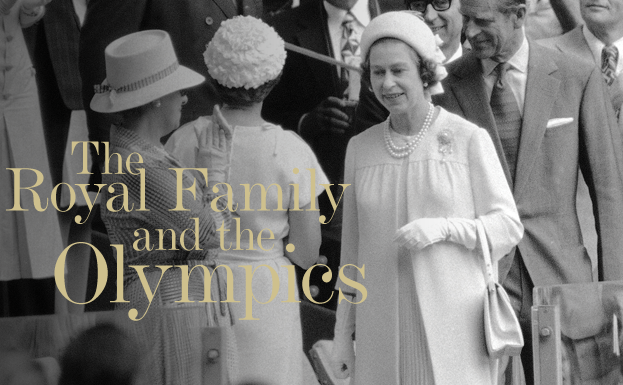
As befits her status as head of state, the Queen ? along with many other members of the Royal Family – will have a huge role to play in the 2012 Olympics. With Prince Philip at her side, the Queen will open the Games during a glittering ceremony at the 80,000-seat Olympic Stadium on July 27th. Following the parade of teams from across the world – headed by Greece, the birthplace of the Games, and finished off by hosts the United Kingdom – the Queen will officially declare the Games open, just as her father King George VI did at Wembley for the 1948 London Olympics. The monarch and The Duke of Edinburgh will also open the Paralympic Games on August 29th at the same stadium. This will represent the first time Queen Elizabeth II has opened the Paralympics and comes at a time when she would normally take her summer holiday. The Queen has great admiration for disabled athletes and is determined to be involved in the games. Yet 2012 is just the latest episode in a long association that the Royal Family has had with the Olympic movement ? the Queen also opened the Games in Montreal in 1976, in her capacity as head of state of Canada, whilst Prince Philip opened the 1956 Melbourne Games on her behalf.

One current member of the Royal Family has even competed in the Games – Princess Anne was a member of the British squad at the 1976 Montreal Games. The Princess Royal was a member of the UK equestrian team and rode the Queen’s horse, ‘Goodwill.’ Royal horse and rider competed in both the individual and team eventing competitions; in the individual, Anne was placed 24th overall, and as a team, Great Britain was placed 9th. She was also the only female competitor not to have to submit to a sex test – as the Queen’s daughter, such a test was seen as inappropriate.

Anne’s daughter Zara Phillips is also a very accomplished equestrian rider and was in line to take part in the 2004 and 2008 Olympics, but injuries to her horse ‘Toytown’ prevented her from competing in either event. Zara has qualified for the 2012 London Olympics and we have high hopes for a Jubilee year victory! Looking back further, British monarchs have had vital roles to play in the history and development of the Olympic movement ? in 1948 it was only thanks to the Queen’s father that the Games took place in the British capital at all. Although London had been elected as host city, Britain almost handed over the role of host to the USA, as the country was in deep financial trouble after the Second World War and rationing was still in force, but the King stepped in with his view that the Games would help restore and revitalise Britain after the rigours of war. This advice was heeded and what became known as the ‘Austerity Games’ were a huge success – organisers were careful to work to a tight budget and no new building work was authorised, with all events taking place in existing venues. Despite initial scepticism, the public warmed to the Games and strong attendances were recorded throughout, with Britain setting a fantastic example of friendliness and fair play. The war had stopped two Games taking place ? in 1940 and 1944 – but the 1948 Olympics started an unbroken sequence of quad-annual Games that has continued right through to 2012.

In fact, the Royal Family’s relationship with the Olympics goes back to almost the very beginnings of the modern Olympic movement ? the patronage of King Edward VII during the first London Olympics is partly responsible for the ongoing success of this incredible sporting exercise. Although three Olympics had already taken place, the London Games of 1908 were part of a movement that barely registered on the world’s collective consciousness. There was even a danger that the noble ideals of Baron Pierre de Coubertin, founder of the modern Olympics, would fizzle out after a lacklustre and sparsely attended 1904 Games in St. Louis, Missouri. Yet King Edward VII became very interested in the Olympics, asking for regular updates from his courtiers on preparations, and happily agreed to open the Games – with a ceremony taking place at a specially constructed stadium at White City in West London. It would be this event, and the King’s involvement, that sparked interest in the Games across the country thanks to the behaviour of the flag bearer of the American team ? a shot putter named Ralph Rose.

Due to the rush in the run up to the 1908 London Olympics Italy were suppose to host ? there was an oversight on the flags circling the stadium, 22 countries were represented at the games but only 20 flags displayed. Sweden and America were most offended that their flags were not showcased and as a result Sweden skipped the first ever opening ceremony and the Americans sent in Ralph Rose to give the royal snub. As all the national teams passed by the Royal box during the ceremony, each flag bearer dipped his national flag in deference to the British monarch, yet Rose kept the Stars and Stripes resolutely upright as he strode past. Afterwards the American team captain declared that this was because ‘This flag dips to no earthly king’ – suggesting that it was a pre-planned snub, rather than just an oversight on the part of Rose. The incident was seized on by the British press and the story was spread across the front pages of national newspapers, which successfully whipped the British public into a patriotic fervour in protest at the perceived slight to the King. The Olympics was now painted as a fight between the British and American teams ? the two strongest teams

Juan Carlos I of Spain
The King of Spain, Juan Carlos, also competed in the Dragon class sailing event ? this time at the 1972 Munich Olympic Games, finishing 15th. He became the King of Spain in 1975 after the death of General Franco and is still on the throne today.

The Duke and Duchess of Palma de Mallorca
This Spanish royal couple both have Olympic claims to fame. The Duchess is the daughter of Juan Carlos and competed in the sailing competition at the 1988 Seoul Olympics with her brother Filipe. Her husband the Duke was a professional handball player for FC Barcelona and was part of the Spanish team at the 1992, 1996 and 2000 Olympics. The 2000 Olympics was the only one he competed in as a royal.

Harald V of Norway
The current king of Norway has a long and distinguished Olympic career, having competed in yachting events at the 1964, 1968 and 1972 Games. He was also flag bearer for the Norwegian team at the 1964 Olympics.

Princess Nathalie of Sayn-Wittgenstein-Berleburg
This member of the Danish royal family took part in the 2008 Beijing Olympics as part of the Danish dressage team and was rewarded with a bronze medal.

Olav V of Norway
Took part in the 1928 Olympics in Amsterdam and competed in the 6 metre sailing class winning Gold for Norway.

Constantin von Liechtenstein
Competed in the 1948 Winter Olympics, finishing 99th in the Alpine Skiing, downhill event.

Queen Sofia of Spain
A reserve for the 1960 Greek Olympic sailing team. Her husband Juan Carlos I and brother Constantine II were also Olympic sailors.

Felipe, Prince of Asturais
The most successful sailor in his family, Felipe came 6th in the sailing class at the 1992 Olympics. His mother, father, sister and uncle were also Olympic sailors.

Princess Haya of Jordan
Not only was princess Haya competing in the Equestrian team at the Sydney 200 Summer Olympics, she was also the flag bearer for Jordan.

Albert II, Prince of Monaco
Has participated in all the games from 1988-2002 as part of the bobsled team at the Winter Olympics. He is also married to a former South African Olympic swimmer, Charlene Wittstock, now Princess of Monaco. John Kelly and John Junior Kelly, Prince Albert’s Grandfather and Uncle respectively also participated in four Olympic gamesn the Games ? and the battle between old world and new captured the imagination, with events packed full of flag waving spectators. Eventually, the British came out on top in the medal table and the honour of the King was deemed to have been upheld, whilst the Games made headlines across the globe – taking the event from the status of a sporting curiosity to that of a major worldwide event.

The World’s Royal Olympians
It is not just Princess Anne that has flown the flag for royalty at the Games ? in fact, athletes with connections to the world’s royal families have a long history at the Olympics. Here are some other royal competitors from over the years:

Prince Friedrich Karl of Prussia
A member of the Prussian royal dynasty, Prince Friedrich was an accomplished horse rider who won a bronze medal on his horse Gibson Boy, at the 1912 Olympics in Stockholm. Just five years later he died in a prisoner of war camp, after being captured by Australian forces during the First World War.

Crown Prince Constantine of Greece
The 1960 Rome Olympics saw Crown Prince Constantine win a gold medal in the Dragon class sailing event. He would later become became King of Greece and reign as Constantine II.

This Article was taken from Royal Britain Issue 2

The Royal Wedding – The Ceremony

0

Over two billion people watched in hushed anticipation as William placed the ring on his bride’s finger in Westminster Abbey. For one short moment it looked as if it wouldn’t fit, but the Prince kept his cool as he managed to put the simple gold band in place. It was surely the only slightly tense moment of an otherwise impressively orchestrated ceremony that proved to be one of the most awesomely beautiful Royal weddings ever staged. The bride-to-be had arrived at Westminster Abbey at 11am to a cacophony of church bells and trumpets. Inside were gathered 1,900 guests anxiously awaiting her and all excited to see ‘the dress’ that she had so magnificently kept secret from the world. None more so that Prince William, of course. Her doting father took her left hand and her sister Pippa carried her train as Kate began her procession along the red carpet that started outside the ancient building and led inside. This took her round the south side of the poppy-lined Grave of the Unknown Warrior – the only gravestone in the abbey over which it is not permitted to walk. They were greeted by Dr. John Hall, the Dean of Westminster and there was a brief pause as final adjustments were made to the Alexander McQueen dress before the procession began. This was, of course the first ceremony ever to be broadcast worldwide in high definition, and the press took full advantage of this. A number of newspapers employed lip-readers to see if they could decipher some comments from the Royals, and it was reported that when Kate and her father arrived at the altar Prince William said to his future wife “you look lovely, you look beautiful” then he cracked a joke to his father-in-law saying: “We’re supposed to have just a small family affair!”

Kate’s bridesmaids (the youngest being Eliza Lopes and Grace van Cutsem – both just three-years-old) and page boys were all assembled beneath the beautiful 18th-century stained glass of the West Window of the Abbey as the bride walked up the aisle to the sound of ‘I Was Glad,’ written in 1902 by Sir Hubert Parry and traditionally sung at the coronation of British monarchs. The Ceremony began with the hymn, ‘Guide Me O Thou Great Redeemer,’ a traditional Christian hymn which, poignantly, was the last sung at Princess Diana’s funeral. Then, Kate began her walk to the altar past delighted guests including Prime Minister David Cameron and other senior politicians. Arriving at the Lantern, she finally joined William at the Sacrarium steps. He was looking very dashing in his red Irish Guards uniform and the couple exchanged loving looks. On the South side of the church were William’s grandparents the Queen and the Duke of Edinburgh, his father the Prince of Wales and stepmother the Duchess of Cornwall, and other members of the Royal Family. On the north side of what is known as the transept were the Middletons, the Spencers and many of William and Kate’s close friends.

The choirs of the Abbey and Her Majesty’s Chapel Royal, St James’s led the congregation beautifully. Then the Dean started the service in the traditional manner with those well known words: “Dearly beloved, we are gathered here in the sight of God and in the face of this congregation, to join together this man and this woman in holy matrimony… If any man can shew any just cause why they may not lawfully be joined together, let him now speak, or else hereafter forever hold his peace.” The Archbishop of Canterbury, Dr. Rowan Williams then took over the solemnisation of the marriage and continued by asking the bride and groom: “..if either of you know any impediment, why ye may not be lawfully joined together in matrimony, ye do now confess it.” For some strange reason this is always a bit of a tense moment, though of course no reasons were forthcoming. Asked if he would “love her, comfort her, honour her and keep her”, it was William’s first opportunity to speak and he replied in a clear and firm voice, “I will.” His bride had a softer tone as she responded “I will” when she was asked the same question.

It was already public knowledge that Kate had chosen to take the modern version of marriage vow that does not include the commitment to ‘obey’ the husband, according to the prayer book of the Church of England. As part of the revised version of the prayer book, the bride in Church of England weddings is asked to take one of two vows: 1. ‘(Wilt) thou have this man to thy wedded husband, to live together after God’s ordinance in the holy estate of Matrimony? Wilt thou obey him, and serve him, love, honour, and keep him in sickness and in health; and, forsaking all other, keep thee only unto him, so long as ye both shall live?’ 2. “(Wilt) thou have this man to thy wedded husband, to live together according to God’s law in the holy estate of Matrimony? Wilt thou love him, comfort him, honour and keep him, in sickness and in health? And, forsaking all other, keep thee only unto him, so, long as ye both shall live?” Like Princess Diana before her, Kate chose the second version. At exactly 11.20 am, William placed the ring on Kate’s finger. The Archbishop addressed the congregation with the words: “Forasmuch as William and Catherine have consented together in holy wedlock, and have witnessed the same before God and this company, and thereto have given and pledged their troth either to other, and have declared the same by giving and receiving of a ring, and by joining of hands; I pronounce that they be man and wife together. In the name of the Father, and of the Son, and of the Holy Ghost. Amen.”

The congregation then sang the well-known hymn, Love Divine, by Charles Wesley, and James Middleton, Kate’s brother, stepped up to deliver the Lesson. His reading from Romans, chapter 12, verses 1, 2, and 9-18 included the words, “Let love be genuine; hate what is evil, hold fast to what is good; love one another with mutual affection; outdo one another in showing honour.” He delivered it in a strong, confident fashion. Next came perhaps the most beautiful and moving piece of music of the day, a sublime anthem specially commissioned for the service by the Dean and Chapter of Westminster. Modern day composer John Rutter’s wonderful music was beautifully performed and its message was simple, “put thou thy trust in the Lord.” Then it was the turn of the Bishop of London, the Rt Rev Richard Chartres, to address the congregation. Calling this “a day of hope” the Bishop, who is a close friend of the groom’s family, ended his address to the congregation, saying: “I pray that all of us present and the many millions watching this ceremony and sharing in your joy today will do everything in our power to support and uphold you in your new life. And I pray that God will bless you in the way of life you have chosen, that way which is expressed in the prayer that you have composed together in preparation for this day.”

He then read a prayer penned by William and Kate: “God our Father, we thank you for our families; for the love that we share and for the joy of our marriage. In the busyness of each day keep our eyes fixed on what is real and important in life and help us to be generous with our time and love and energy. Strengthened by our union help us to serve and comfort those who suffer. We ask this in the Spirit of Jesus Christ. Amen”. After a Latin choral composition sung by the choirs and the reading of The Lord’s Prayer it was time for all to join in singing William Blake and Edward Elgar’s inspirational hymn, Jerusalem. There can’t have been anyone present who didn’t already know those immortal words: “And did those feet in ancient time walk upon England’s mountains green? And was the holy lamb of God on England’s pleasant pastures seen?”

Following the blessing of the marriage by the Dean, and the singing of The National Anthem, the married couple and their immediate family got a rare if short opportunity for some privacy as they went behind the scenes to the tiny enclosed Chapel of St Edward the Confessor behind the altar to sign the three registers required for a Royal wedding at Westminster Abbey. Two registers forming part of the Abbey collection and a further one the Chapel Royal register kept by officials at the Chapel Royal. They were joined by Prince Charles and Camilla, Michael and Carole Middleton, best man Harry and Kate’s brother James and sister Pippa.

The happy couple emerged some eleven minutes later to a rousing 30-second fanfare entitled Valiant and Brave performed by seven trumpeters and one drummer from the RAF Central Band. The piece was named in honour of the motto of the Prince’s RAF Search and Rescue No 22 Squadron. Before making their way back down the aisle the couple paused to pay their respects to the Queen. Kate gave a low curtsy, William a nodding bow. The bride and groom then walked back through the church with Harry and Pippa and their Bridesmaids and Page boys behind them, and emerged to greet the adoring crowds outside. The entire ceremony had lasted a relatively short one hour and ten minutes, but as far as history is concerned it will never be forgotten.


This Article was taken from Royal Britain’s Guide to the Royal Wedding – Part 2

– See more at: http://royalbritainmagazine.co.uk/article_single.php?id=2#sthash.tuOOyng1.dpuf

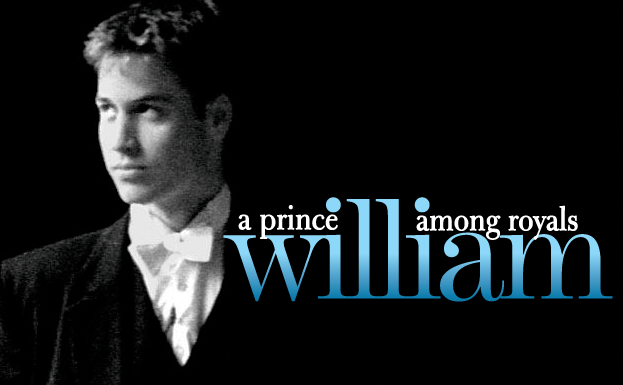
A Prince Among Royals

0

As a male-line grandchild of the sovereign and son of the Prince of Wales, William was styled His Royal Highness Prince William of Wales, though he was affectionately called Wombat or Wills (the latter a name by which he is still known by the general public) by his parents.

It was reported that, at age seven, the Prince said to his mother that he wanted to be a police officer when he was older, so that he would be able to protect her (said to be a reaction to his parents marital crisis); a statement to which his brother responded: Oh, no you can’t. You’ve got to be King. Prince William’s first public engagement was on 1 March 1991 (Saint David’s Day), during an official visit of his parents to Cardiff in Wales. After arriving by plane, the Prince was taken to Llandaff Cathedral, where he signed the visitors’ book, thereby demonstrating that he was left-handed.

On 3rd June 1991, William raised much alarm when he was admitted to Royal Berkshire Hospital after having accidentally been hit on the side of the forehead by a fellow student wielding a golf club. The Prince did not lose consciousness, but did suffer a depressed fracture of the skull and was operated on at the Great Ormond Street Hospital, resulting in a permanent scar. Proof, if ever it were needed, that while he may be a Prince, William was still very much a boy and behaved like one when out of the public eye.

William was educated at independent schools, starting at Jane Mynors’ nursery school and the pre-preparatory Wetherby School, both in London. Following this, he attended Ludgrove School and was privately tutored. William was then admitted to Eton College. Eton was a choice that went against the family tradition of sending royal children to Gordonstoun (William?s grandfather, father, two uncles, and two cousins all attended). But Charles is not thought to have enjoyed his time there, while both Diana?s father and brother had attended Eton, and William did well there. He studied geography, biology and history of art at A-Level, obtaining an A in geography, a C in biology and a B in history of art. At Ludgrove he also participated in football ? along with swimming, basketball, clay pigeon shooting and cross-country running.

But while his academic career was running smoothly, the young Prince’s home life was about to be shattered. William’s mother, Diana, was divorced from the Prince of Wales when she died in a tragic car accident in Paris, France in 1997. Fifteen-year-old William was staying at Balmoral Castle along with his brother and father at the time, and the Prince of Wales waited until early the following morning to tell his sons about their mother’s death. In view of the tragedy that befell Princess Diana, a car accident partially caused by her being hounded by paparazzi, it was agreed between the Royal Family and the tabloid press that William would be allowed to study free of paparazzi intrusion in exchange for regular updates of the Prince’s life, which they were duly given.

After completing his studies at Eton, the Prince began a gap year, during which he took part in British Army training exercises in Belize and, for ten weeks, taught children in the town of Tortel, in southern Chile, as part of the Raleigh International programme. By 2001, William was back in the United Kingdom and had enrolled, under the name William Wales at the University of St Andrews, in the historic Scottish town as much known for its golf as its university. News of this caused the number of applications to St Andrews to swell, mostly from young women who wanted an opportunity to meet the charming young Prince.

The extra attention did not deter him, though, and he embarked on a degree course in art history, later changing his main subject to geography, and going on to earn a Scottish Master of Arts degree with upper second class honours in geography the highest academic honours of any heir to the British and other Commonwealth realms’ thrones. He also met a young lady named Catherine Elizabeth Middleton. During their graduation ceremony, the University?s vice-chancellor, Dr. Brian Lang said: ?You will have made lifelong friends you may even have met your future husband or wife. How prescient he was.

This Article was taken from Royal Britain’s Guide to the Royal Wedding – Part 1

Duke of Cambridge arrives at hospital to visit pregnant Duchess

0

Duchess of Cambridge pregnant: Duke of Cambridge arrives at King Edward VII Hospital in London to spend a second day by the bedside of his pregnant wife.

Duchess of Cambridge pregnant: world rejoices at news of Royal baby

0

The news that the Duke and Duchess of Cambridge are expecting a baby was big news in Commonwealth countries and Europe – less so in China.

Duchess of Cambridge pregnant: Messages of congratulations for Kate and William

0

From David Cameron to the Obamas, well-wishers on both sides of the Atlantic congratulate the Duke and Duchess of Cambridge on the news that they are expecting their first child.

Duchess of Cambridge pregnant: all worth it in the end, says young mother

0

For Ebru Macavoy, having the same illness as the Duchess of Cambridge, during her pregnancy was a “living hell”.

The Duchess of Cambridge will be feeling extremely unwell, but it will pass

0

New mothers like to wait for their 12-week scan to announce the thrilling news that they are pregnant. The Duchess of Cambridge can count herself a little unlucky that a combination of a rare condition and her high profile has forced her hand.

Duchess of Cambridge treated at hospital with a long Royal tradition

0

The private hospital where the Duchess of Cambridge is being treated has a long association with the Royal Family and is where many of them have undergone treatment in recent years.

Royal baby boost could help British economy

0

The Royal baby announcement is set to provide a shot in the arm for the sluggish UK economy that could be worth hundreds of millions of pounds.

Latest news